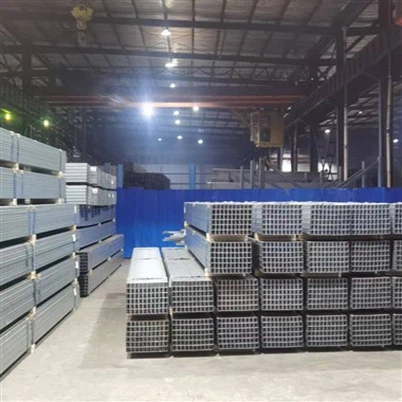
What Is The Advantage Of Cold-formed Steel Tube?
Leave a message
1. Retain the strength and properties of the material: Cold bending is performed at room temperature. Compared with thermal processing (such as hot bending or hot rolling), cold bending can better retain the original strength and properties of the material. This is important for applications where the strength of the material needs to be maintained.
2. Precise shape control: Cold bending can achieve higher shape control accuracy. By rationally designing and controlling cold bending process parameters, precise bending angles, curve shapes and sizes can be obtained. This is very important for workpieces that require precise shapes, such as pipes, profiles, channels, etc.

3. No additional heating equipment is required: Compared with thermal processing, cold bending does not require additional heating equipment, saving energy and equipment costs. Cold bending can be performed at room temperature, reducing energy consumption and equipment investment during the production process.
4. Applicable to a variety of materials: Cold bending is suitable for a variety of metal materials, such as steel, aluminum, copper, stainless steel, etc. The cold bending properties of different materials may vary, but cold bending technology can adapt to the processing needs of different materials.
5. High production efficiency: The cold bending production line can achieve efficient mass production. Through automated equipment and process optimization, cold-bending production lines can achieve high-speed, high-precision production and improve production efficiency and capacity.
6. No subsequent heat treatment is required: Since cold bending is performed at room temperature, subsequent heat treatment is usually not required. This saves time and costs and reduces energy consumption during production.