The Critical Role Of Pipe End Preparation in Global Infrastructure Projects
Leave a message
In the international steel trade, a pipe is often judged not by its body, but by its ends. While the metallurgy of the steel-whether it is ASTM A500 Grade B or API 5L X52-defines the strength of the material, the Pipe End Preparation defines the integrity of the entire system. For a procurement manager or a project engineer, selecting the wrong end type is a recipe for catastrophic field failures, expensive on-site rework, and failed Non-Destructive Testing results.
When we discuss "End Prep" in a manufacturing context, we are talking about the interface where two pipes meet. This interface must facilitate a leak-proof seal, handle high-pressure loads, and withstand thermal expansion. Below is an engineering-focused breakdown of the five primary pipe end treatments used in modern global infrastructure.

The Precision of Plain Ends (PE): Beyond the Cut
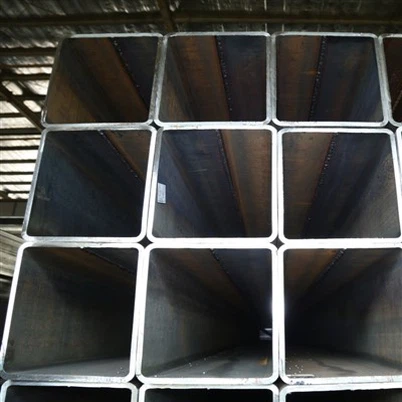
A Plain End sounds deceptively simple. To the untrained eye, it is just a pipe cut at a 90°angle. However, in high-end structural applications like skyscraper skeletons or bridge supports using square and rectangular hollow sections, the "squareness" of this cut is paramount.
In our production line, we move away from manual oxy-fuel torches, which leave a Heat Affected Zone and jagged edges. Instead, we utilize high-capacity CNC Band Saws. A high-quality PE must maintain a perpendicularity tolerance of less than 1.6mm. If the end is even slightly skewed, the pipe will not sit flush against the base plate, creating uneven stress distribution that can lead to structural cracks under load. Furthermore, Mechanical Deburring is mandatory. Removing the "burr" ensures that when pipes are fitted into socket-weld couplings, there are no metal shavings trapped inside that could later damage valves or pumps downstream.

The Science of Beveling (BE): The Welder's Blueprint
For pipelines carrying oil, gas, or high-pressure steam, the Bevelled End is the industry gold standard. The goal of a bevel is to create a "V" shaped valley between two pipes, allowing a welder to lay down multiple passes of filler metal that fuse the entire thickness of the pipe wall.
A standard bevel isn't just a random slope; it is a precise geometric requirement, typically a 30°angle with a tolerance of +5°/-0°. The most critical part of this geometry is the Root Face (also called the "land"). We machine this to a flat 1.6mm surface. If a factory delivers a "knife-edge" bevel with no root face, the welder will likely burn through the metal during the initial root pass. Conversely, if the root face is too thick, the weld will fail to achieve full penetration, leading to an immediate "fail" during radiographic or ultrasonic testing. For thick-walled pipes (above 20mm), we often employ a J-bevel, which allows for a tighter weld pool and significantly reduces the amount of expensive welding wire consumed.

Threaded and Coupled (T&C): Engineering for Mechanical Assembly
In environments where welding is prohibited-such as "live" gas plants or remote agricultural sites-Threaded and Coupled ends provide a reliable mechanical solution. The threads serve as both the structural fastener and the critical sealing surface. Precision here is maintained through rigorous Gauging, utilizing calibrated Ring Gauges to verify the taper and pitch of NPT or BSPT threads according to international standards.
To address specific project environments and prevent "thread galling"-a common pitfall in low-quality exports where threads seize during assembly-we offer specialized post-processing based on client specifications. Depending on the customer's site requirements and shipping conditions, our process can involve a secondary step of applying high-grade anti-seize lubricant and immediately fitting heavy-duty Thread Protectors to ensure the precision-cut threads remain pristine during transit and installation.
For professional B2B buyers, the "Coupling" part of T&C is equally vital. We ensure that every coupling strictly matches the pipe's steel grade and pressure rating, as a mismatch here is a frequent cause of joint failure under hydro-test conditions. Through strict material traceability, we eliminate these risks before the product ever leaves our facility.

Grooved Ends: The "Fast-Track" Installation Method
The rise of the Grooved End has transformed the fire protection and HVAC industries. Instead of spending hours welding a single joint, a grooved coupling can be installed in minutes.
The processing involves either Roll Grooving or Cut Grooving. For thinner-walled pipes, we prefer roll grooving because it cold-forms the groove into the pipe without removing any metal, thus preserving the internal coating or galvanization. For heavy-wall Schedule 40 or 80 pipes, cut grooving is used to ensure a deep, precise channel for the coupling's gasket to seat. The primary engineering advantage of a grooved system is its ability to absorb vibration and seismic movement. In earthquake-prone regions, a grooved pipeline acts as a flexible chain rather than a rigid rod, preventing ruptures during ground shifts.

Swaged and Expanded Ends: Optimized Nesting
In drainage systems and structural pole manufacturing, the goal is often to eliminate the need for third-party couplers entirely. This is where Expanded and Swaged ends come into play.
Using heavy-duty Hydraulic Forming Dies, we can expand the diameter of one pipe end just enough to allow another pipe of the same nominal size to slide inside. This "Bell and Spigot" design is perfect for low-pressure fluid transport. In structural applications, such as scaffolding or telescopic flagpoles, swaged ends allow pipes to nest into each other with minimal play. This not only speeds up assembly but also drastically reduces the Bill of Materials for a project by removing the cost of external sleeves and fasteners.
By focusing on these technical details, you aren't just buying steel; you are buying a component that is ready for immediate, high-performance integration into your project's infrastructure.