Why You Can't Use Standard Pipes For Deep Foundations
Leave a message
Let's address the elephant in the room for steel procurement: the temptation to swap specialized pipe piles for cheaper fluid pipes. On a spreadsheet, those cost savings look like a strategic win; on the construction site, they are a blueprint for disaster. Despite their outward similarities on a loading dock, these two products are engineered with entirely different 'genetic makeups.' To substitute a fluid pipe-the building's 'blood vessel'-for a structural 'skeleton' is to ignore the fundamental metallurgical demands of deep foundation work. One is designed to contain internal pressure; the other is forged to survive violent impacts and anchor thousands of tons of dead weight. From a structural standpoint, the answer to this substitution is a definitive and non-negotiable no.
Here is a deep dive into the hard data, manufacturing realities, and real-world engineering mechanics that separate these two critical steel products.
The Core Mechanical Logic: Internal Pressure vs. Axial Compression
Take your standard ASTM A53 or GB/T 3091 pipes: these are the workhorses of fluid transport. The design logic here is simple-withstand internal pressure and prevent leaks. In the world of procurement, it's easy to overlook that these pipes are tested for flow, not for the vertical stress of being driven into the bedrock.Their quality control revolves around hydrostatic testing; as long as the pipe can hold internal water or gas pressure without leaking or bursting, it does its job.
Steel pipe piles, on the other hand, operate in a high-stress, violent environment. Manufactured under stringent structural standards like ASTM A252(specifically developed for steel pipe piles) or EN 10219 for structural hollow sections used in load-bearing applications.
The Data Reality: When a hydraulic hammer drives a pile into the earth, the impact forces are immense. This is why high-grade structural hollow sections-often utilizing steel grades like Q355 or ASTM A252 Grade 3-are mandated. They provide reliable yield strength levels (typically ranging from 310 MPa (for ASTM A252 Grade 3) to 355 MPa (for Q355B). If you strike a standard, low-yield fluid pipe with a pile driver, the top will immediately suffer from "mushrooming" (severe plastic deformation), or the pipe will buckle entirely before reaching the bearing stratum.
Manufacturing Precision: More Than Just Rolling Steel
Many buyers overlook the geometric tolerances required for deep foundation work. In structural engineering, minor manufacturing deviations compound into massive structural failures.
Straightness is Non-Negotiable: Precision straightness is the dealbreaker here. While generic pipes might allow for some 'wiggle room,' a structural pile must be laser-straight. We're talking about a strict 1/1000th tolerance of the total length. Why? Because an eccentric load at the pile head is an engineer's nightmare-it turns a routine drive into a catastrophic fracture once the steel meets underground resistance. If a 30-meter pipe has even a slight bow, the vertical energy of the pile driver converts into a lateral bending moment. This causes the pile to veer off its designated path or fracture underground.
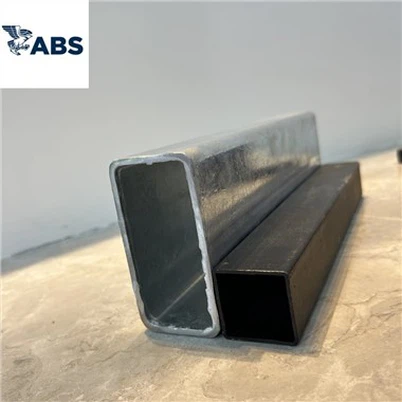
R-Angle Precision in Hollow Sections: For anyone fabricating structural nodes, R-angle precision is a make-or-break detail. Inconsistent corners are a welder's nightmare, leading to uneven gaps and poor fit-up that eat into your timeline. When we look at square or rectangular piles, we look at the corners: if the R-angle isn't tight and consistent, it signals a lack of control in the manufacturing line that will eventually haunt you during on-site assembly.
CEV and Field Weldability: In the foundation business, your chemistry is your destiny. Because deep piles almost always require on-site splicing, controlling the CEV is a non-negotiable requirement. High carbon equivalence is the primary culprit behind hydrogen-induced cracking-the silent killer of structural integrity. While a standard-grade pipe might pass a pressure test at the mill, its chemical footprint isn't optimized for the high-heat, high-stress demands of a structural field weld. If the chemistry isn't dialed in for weldability, no amount of skill on the torch can save a seam destined to fail.
A Real-World Lesson: The Middle East Port Expansion
The danger of substituting standard pipes for structural piles isn't just theoretical. During a major deep-water port expansion project in the Middle East last year, a subcontractor attempted to use standard, large-diameter ERW (Electric Resistance Welded) water pipes as temporary trestle supports to save on material costs.
The geological survey showed layers of dense coral reef. When the diesel pile hammers reached peak driving energy to penetrate the reef, the weld seams and heat-affected zones (HAZ) of the standard ERW pipes began to show longitudinal cracking under the high driving stresses generated by the pile hammer. The pipes simply lacked the low-temperature impact toughness and structural weld integrity required for the job.
The project faced immediate work stoppages. The engineering team ultimately had to replace the entire batch with proper EN 10219 compliant, LSAW steel pipe piles. These purpose-built structural tubes had undergone normalizing heat treatments and with weld seams subjected to non-destructive testing such as ultrasonic inspection (UT), easily absorbing the impact energy and penetrating the bedrock. The initial "cost savings" resulted in millions of dollars in project delays.

Durability: Surviving the Underground War
Finally, there is the issue of lifespan. Standard pipes are usually shipped with a light coating of black varnish to prevent rust during transit.
Steel pipe piles are sent to war against corrosive soils, acidic groundwater, and marine environments.
Corrosion Allowance: Structural engineers will physically add 2mm to 3mm of extra wall thickness purely as a "corrosion allowance" to ensure the pile remains structurally sound over a 50-year design life.
Heavy-Duty Coatings: In a marine environment, saltwater isn't just a nuisance-it's a relentless chemical attack. You aren't just looking for a coat of paint; you need actual armor. This is where Hot-dip galvanizing to ISO 1461 standards becomes non-negotiable, providing an average 85μm zinc shield. For the most aggressive chloride-rich zones, heavy-duty systems like 3PE or FBE act as an impenetrable skin. If your coating spec doesn't match the hostility of the soil, you're essentially putting a timer on the life of your foundation.

A steel tube is only as good as the engineering standard behind it. While standard pipes are perfect for moving fluids safely, they are a severe liability when used to support heavy loads.
A steel tube is only as reliable as the engineering standard it was born from. While standard pipes excel at fluid transport, they are a liability when rebranded as structural supports. For any infrastructure, marine, or foundation project, the only path to structural integrity is demanding certified steel pipe piles. Don't just take a quote at face value-scrutinize the mill's Material Test Certificate (MTC) for precise CEV, verified straightness, and actual yield strength. In this industry, the MTC isn't just paperwork; it's the only thing standing between a successful build and a catastrophic failure.