Understanding JIS G3466 STKR400 And STKR490
Leave a message
Introduction
JIS G3466 is a Japanese standard for structural steel. It sets rules for strength, toughness, and quality. Engineers use it to make sure steel performs reliably.
STKR400 and STKR490 are two common grades. Choosing the right grade affects how much load the structure can hold, how long it lasts, and how much it costs. Knowing their differences helps engineers design better structures.
Material and Standard Overview
JIS G3466 Standard
This standard JIS G3466 sets many steel grades.They are used in bridges, buildings, and machinery. It makes sure the steel stays reliable in quality.
Chemical Composition
STKR400 has moderate carbon and alloy elements. This makes it easy to weld and shape.
STKR490 contains more carbon and alloy elements. Increasing strength but require careful welding.
These composition differences influence strength, ductility, and flexibility.
Mechanical Properties
STKR400 has a yield strength of about 400 MPa and tensile strength around 490 MPa. Its elongation is about 21%, so it can bend a little under stress.
STKR490 has a yield strength around 490 MPa and tensile strength near 580 MPa. Its elongation is about 18% making it stiffer and stronger. Stronger steel can reduce material weight but needs more precise fabrication.
STKR490 offers higher stiffness and strength. This added strength can reduce material weight, but it requires more precise fabrication.
Product Description
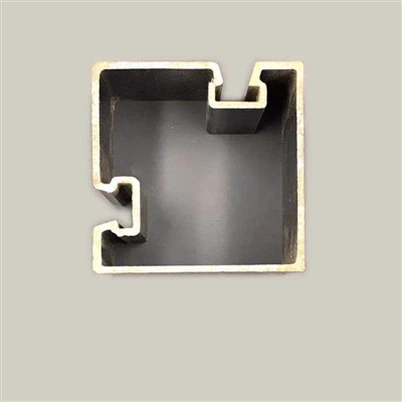
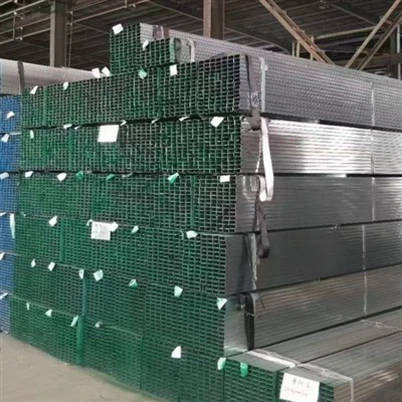
JIS G3466 STKR400 STKR490 Square and Rectangular Carbon Steel Tube for Structure
Chemical Composition
| Steel Grade | Chemical Composition's | ||||
| C | Si | Mn | P | S | |
| STKR400 | 0.25max | - | - |
0.040max |
0.040max |
| STKR490 | 0.18max | 0.55max | 1.5max | 0.040max | 0.040max |
Mechanical Proporties
| Steel Grade | Tensile strength | Yield Strength | Elongation % |
| N/mm2 | N/mm2 | (No.5 test piece) | |
| STKR400 | 400(41)min | 245(25)min | 23min |
| STKR490 | 490(50)min | 235(33)min | 23min |
Mechanical Performance and Applications
Load-Bearing Capabilities
Both grades support heavy loads. STKR490 performs better in high-stress conditions, while STKR400 is suitable for standard structures.
Typical Applications
STKR400 is used in bridges, building frames, machinery supports, and standard modular buildings.
High-strength bridges, heavy machinery, and vehicle frames are often use STKR490. It is good for projects needing strong and light materials.
Design Considerations
High-strength steel allows lighter structures without losing safety. It also helps save space. But it usually needs more careful fabrication.
Welding and Fabrication
Welding Characteristics
STKR400 is easy to weld with standard methods. It works for most construction projects.
STKR490 requires controlled welding and sometimes preheating. Skilled workers are important to avoid cracks.
Forming and Processing
STKR400 can be bent, cut, and punched without much difficulty. STKR490 is stiffer and may require specialized tools for processing.
Correct processing ensures strength and safety.
Engineering Case Studies
Bridges use STKR400 for regular parts. STKR490 is used for high-load or long-span sections.
Buildings use STKR400 for general frameworks. Taller or heavier structures may use STKR490.
Heavy machinery often needs STKR490 because it handles repeated stress. The choice affects safety, cost, and efficiency.
Material Selection and Cost Considerations
Choosing between STKR400 and STKR490 depends on strength needs.STKR490 usually costs more and requires careful fabrication.
It can reduce material usage and last longer. Maintenance cost is lower for stronger steel.
Durability and Service Life
Both steels work well in normal conditions.In corrosive environments, steel pipe needs coatings like paint or galvanizing.
STKR490 maintains its strength under high stress for a long time, which makes it suitable for critical structures.
Comparison with Related JIS Stabdards
Grasping the role of JIS G3466 within the JIS system is important for correct specification:
Compared to JIS G3444: G3444 covers general circular tubes, while G3466 focuses on square and rectangular sections for building structures.
Compared to JIS G3101: G3101 defines base materials like plates and bars, whereas G3466 specifies finished hollow sections tailored for architectural use.
Specialized Focus: G3466 enforces stricter dimensional tolerances and surface quality requirements, making it suitable for architectural applications.
Conclusion
STKR490 is stronger and better for heavy-duty projects.STKR400 is easy to work with and fits most standard structures.
When choosing the right steel material we should consider strength, fabrication, cost. If buyer know these grades well,that help engineers build safe,durable and affordable structures.
FAQ
Q:What is JIS G3466?
A:JIS G3466 is the Japanese standard for cold-formed welded structural hollow sections (square, rectangular, circular) used in building structures.
Q:What is the difference between STKR400 and STKR490?
A:STKR490 has higher yield (~490 MPa vs ~400) and tensile (~580 vs ~490), but lower elongation and needs more careful welding. STKR400 is easier to fabricate.
Q:Which grade should I use for bridges?
A:Use STKR400 for standard bridge members; use STKR490 for long-span or high-load sections where weight saving matters.
Q:Does STKR490 need pre-heating for welding?
A:Often yes. Its higher carbon/alloy content requires controlled welding and sometimes pre-heating to avoid cracks.
Q: What is the EN equivalent of STKR400?
A:STKR400 is closest to EN10219 S355 (cold-formed) or S355J2H (EN10210 hot-finished) square/rectangular hollow sections.