Three Types Of Angle Steel Transmission Tower
Leave a message
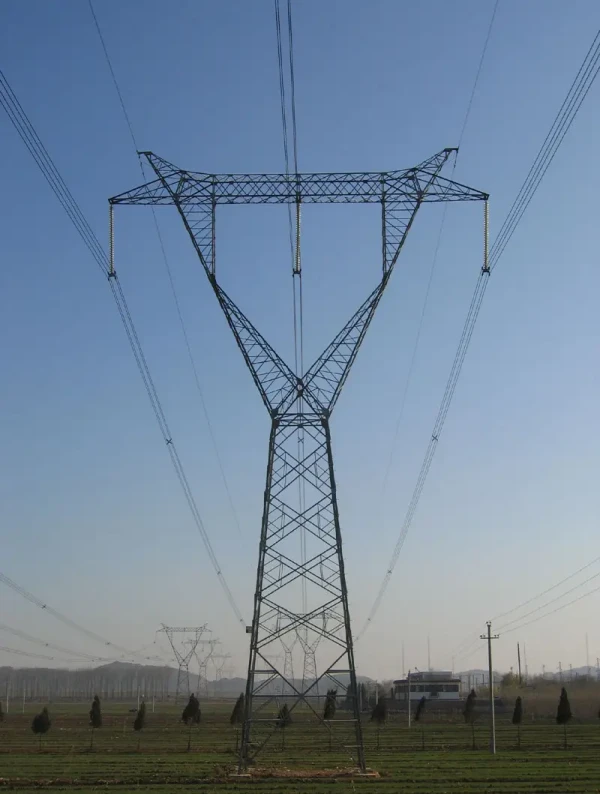
Straight tower, also known as hanging tower rod, has suspended insulator strings and comes in three varieties: single hanging, double hanging, and V hanging. The straight tower, which is an angle steel transmission tower located in the middle of the straight section of the line, is generally represented by the letter Z and accounts for a large proportion of the transmission line. The straight tower's material and angle of inclination is relatively small, the tower body is lighter, and there are fewer anchor bolts at the connection point. It only bears horizontal and vertical wind loads, and the tower column can be skewed in the absence of balancing support.
Because the use of tension towers on the line is limited, lower-side tension insulator strings are chosen as an angle steel transmission tower with a small overall length and width. Because of its large raw material specifications, large inclination of the tower body, and large number of anchor bolts at the connection point, the tension tower component is a load-bearing tower. When a safety accident occurs, the damage scope is limited, and the suspension point of the transmission line is difficult to shift.
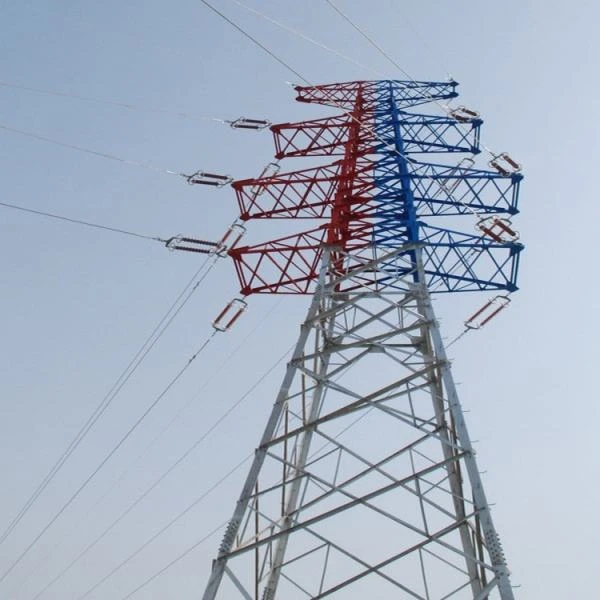
3. Crossing Tower
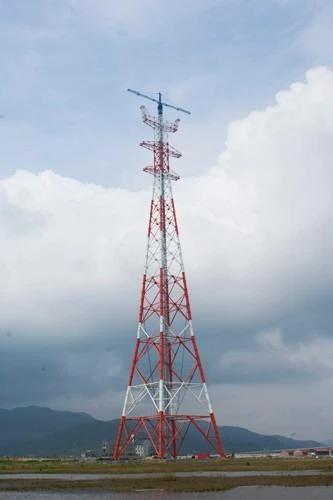
In comparison to ordinary straight towers, the structure of the tower body is complex, the tower height is high, and the tower weight ranges from 50 to 200 tons. Open angle steel transmission tower is the most common K. The shadows of street crossing towers can be seen in pairs when crossing roads, railway lines, valleys, or rivers on both sides. It has a worse load condition and suspension method than straight towers, but it has a higher load correlation. The crossing tower is required if the route specifies that the crossing section requires increased security.