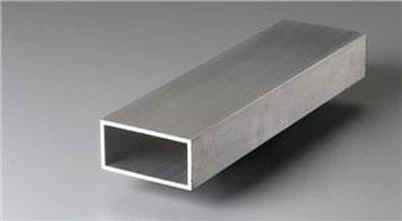
Four Methods Of Degreasing The Surface Of Square Tube
Leave a message
During the production and transportation of square tubes, oil stains will inevitably be attached to the surface, which will affect the quality of rust removal and phosphating, and reduce the bonding force between the coating and the substrate. So how to degrease the rectangular tube?

(1) Organic solvent cleaning
Mainly use organic solvents to dissolve saponified and unsaponified oils to remove oil stains. Commonly used organic solvents include ethanol, gasoline for cleaning, toluene, carbon tetrachloride, trichloroethylene, etc. Among the more effective solvents are carbon tetrachloride and trichloroethylene, which do not burn and can decrease at higher temperatures. It should be noted that after degreasing with organic solvents, supplementary degreasing must also be carried out. Because when the solvent volatilizes on the surface of the square tube, there is usually a thin film left, which can be removed by alkali cleaning and degreasing, electrochemical degreasing, and other processes in the subsequent process.
(2) Electrochemical cleaning
The more commonly used is cathodic degreasing, or alternate use of cathode and anode for degreasing. The hydrogen gas or the oxygen precipitated on the anode by the electrochemical reaction is used to mechanically stir the solution on the surface of the rectangular tube to promote the detachment of oil from the metal surface. At the same time, the solution is continuously exchanged, which is beneficial to the saponification reaction and emulsification of oil stains, and the remaining oil stains are separated from the metal surface under the influence of continuously precipitated air bubbles. However, in the process of cathodic degreasing, hydrogen gas permeates into the metal, which causes hydrogen embrittlement. Usually, the cathode and anode are alternately degreased to prevent hydrogen embrittlement.
(3) Alkaline cleaning
A cleaning method based on the chemical action of alkali is widely used because it is easy to use, low in price, and easy to obtain raw materials. Since the alkaline cleaning process relies on multiple functions such as saponification and emulsification, it is impossible to use a single alkali to achieve the above performance. Usually, a variety of components are used, and sometimes auxiliary agents such as surfactants need to be added. The level of alkalinity determines the degree of saponification reaction, and high alkalinity can reduce the surface tension between the oil stain and the solution, making the oil stain easy to emulsify. In addition, by washing with water after alkali washing, the cleaning agent remaining on the surface of the rectangular tube can be removed.
(4) Surfactant cleaning
It is a widely used method of degreasing by utilizing the characteristics of low surface tension, good penetrating wettability, and strong emulsifying ability of surfactants. Through the emulsification of the surfactant, an interface film with a certain strength is formed on the oil-water interface, and the state of the interface is changed, so that the oil particles are dispersed in the aqueous solution to form an emulsion. Or through the dissolving action of the surfactant, the water-insoluble oil stain on the square tube is dissolved in the surfactant micelles, so as to achieve the purpose of transferring the oil stain to the aqueous solution.