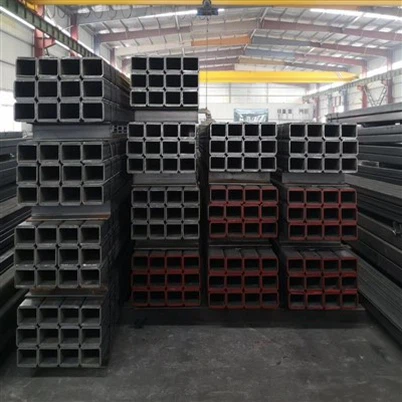
Differences Between Cold-Formed Steel Tubes And Hot-Rolled Steel Tubes
Leave a message
Steel tubes are widely used in various industries. Two common types are cold-formed and hot-rolled tubes. Understanding their differences is important for making the right choices.

1. Manufacturing Process
Cold-formed steel tubes are made by bending flat steel at room temperature without heating. Hot-rolled steel tubes are produced by passing a steel billet through rollers at high temperatures.
For instance, cold-formed tubes involve precise bending, while hot-rolled tubes undergo intense thermal and mechanical treatment.
2. Mechanical Properties
Cold-formed tubes usually have higher yield and tensile strengths due to work hardening. Hot-rolled tubes often have better ductility and toughness.
For example, in high-strength applications, cold-formed tubes might be better. But when impact resistance is needed, hot-rolled tubes could be preferred.
Mobile/Whatsapp: +8618222029592
3. Surface Finish
Cold-formed tubes typically have a smoother surface. Hot-rolled tubes may have a rougher surface with scale and imperfections.
This affects appearance and performance. Where a good-looking surface is necessary, cold-formed tubes are often chosen.
4. Dimensional Accuracy
Cold-formed steel tubes have better dimensional accuracy and tighter tolerances. Hot-rolled tubes may have larger dimensional variations.
This is crucial in applications needing precise fit.
5. Cost
Cold-formed tubes are usually more expensive due to complex processes and material requirements. Hot-rolled tubes are more cost-effective for large-scale production.
The final cost depends on factors like quantity, application, and market conditions.
In conclusion, the choice depends on project needs. Factors like properties, finish, accuracy, and cost should be considered.