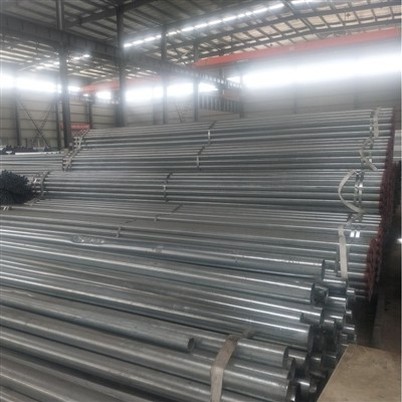
Anti-corrosion Techniques For Anti-corrosion Steel Pipe
Leave a message
The anti-corrosion method of anti-corrosion steel pipes generally uses coating anti-corrosion. Coating anti-corrosion is to apply paint evenly and densely on the surface of the rust-removed metal pipe to isolate it from various corrosive media. It is the most basic method for anti-corrosion steel pipes. One of the methods. Steel pipe anti-corrosion coatings are increasingly using composite materials or composite structures. These materials and structures must have good dielectric properties, physical properties, stable chemical properties, and a wide temperature adaptation range.

1. Anti-corrosion coating on the outer wall: types of coating materials and usage conditions on the outer wall of the pipeline.
2. Inner wall anti-corrosion coating: a thin film coated on the inner wall of the pipe to prevent corrosion inside the pipe, reduce friction resistance, and increase output. Commonly used coatings include amine-cured epoxy resin and polyamide epoxy resin, with a coating thickness of 0.038 to 0.2 mm. To ensure that the coating is firmly bonded to the pipe wall, the inner wall of the pipe must be surface-treated. Since the 1970s, there has been a tendency to use the same material for the inner and outer wall coatings of pipes, so that the coating of the inner and outer walls of the pipe can be carried out at the same time.
3. Anti-corrosion steel pipe insulation coating: To reduce heat dissipation from the pipeline to the soil on medium- and small-diameter thermal pipelines transporting crude oil or fuel oil, a composite layer of insulation and anti-corrosion is added to the outside of the pipeline. The commonly used insulation material is rigid polyurethane foam, with a suitable temperature of -185~95℃. This material has a soft texture. To increase its strength, a high-density polyethylene layer is applied outside the insulation layer to form a composite material structure to prevent groundwater from penetrating the insulation layer.
4. If the outer protective pipe is a polyethylene pipe, no anti-corrosion is required
Polyethylene is odorless, non-toxic, feels like wax, has excellent low-temperature resistance (the lowest operating temperature can reach -70~-100℃), has good chemical stability, and is resistant to most acids and alkalis (not resistant to oxidation) (acid), insoluble in general solvents at room temperature, and has low water absorption. However, because it is a linear molecule, it can be slowly soluble in some organic solvents without swelling and has excellent electrical insulation properties.