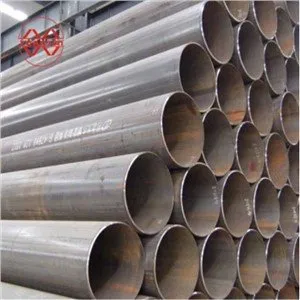
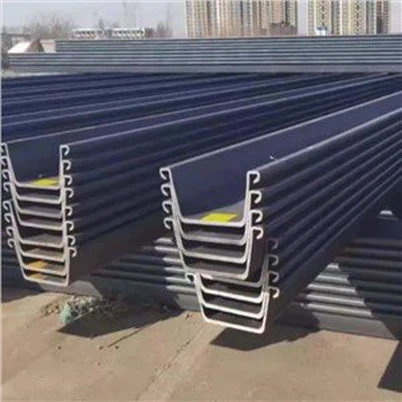
What Is The Difference Between A Steel Pipe And Steel Tube?
Leave a message
1. Variety of shapes: steel pipe is round, while steel tube has square, rectangular, and round orifices;
2. Different levels of toughness: pipe is rigid and unbending, while flexible copper and brass tubes are also available;
3. There are several different classification systems: steel pipe according to wall thickness code, steel tube according to nominal diameter (European standard), and steel tube according to the outer diameter and wall thickness (American standard)
4. Different use environments: steel pipe is used when a large diameter is required; 10-inch steel pipe is very common, and steel pipe can range in size from half an inch to several feet; steel tube is used when a small diameter is required;

5. The requirements' main points differ in the following ways: Steel pipe pays attention to the wall thickness because the steel pipe primarily transports fluid, and internal pressure capacity is needed. Steel tube pays attention to the accuracy of the outer diameter because it involves pressure, and for cooler steel tube, heat exchanger steel tube, and boiler steel tube.
6. The relationship between the wall thickness after the wall thickness grade is different: the wall thickness grade of the tube is increased by 1 grade, and the increase is fixed; however, the wall thickness of the steel pipe is represented by a schedule, and the numerical relationship of each grade is uncertain. Sch is actually (design pressure/design temperature allowable stress) x 1000, so the wall thickness of Sch.20 with 1/8" (NPS) = 6mm (DN) is about 1.245mm, while that of Sch.30 is about 1 448mm, but the wall thickness of Sch.40 is 1.727mm.
7. There are various ways to connect the steel tube; it can be done quickly and without much effort. The connection of the steel pipe is labor-intensive and can be welded or screwed; it can be flared, brazed, or coupled. Connection via a flange is possible.