What Is A Flange?
Leave a message
The flange is a disc-shaped part, which is a common part in pipeline engineering, and flanges are used in pairs. Its function is to weld flanges (flat welding or butt welding) at both ends of steel pipes in pipeline engineering to connect with other steel pipes or valves and pipe fittings with flanges. Install a flange on the pipelines that need to link. deficient-pressure pipelines can use wire flanges, and pipelines with pressures above 4kg use welding flanges. Add sealing points within the two flanges, immediately after tightening with bolts. Flanges of different pressures have different thicknesses and use different sizes and numbers of bolts. When the pump and valve are connected to the pipeline, the ends are also made into corresponding flange shapes, which we call flange connections.
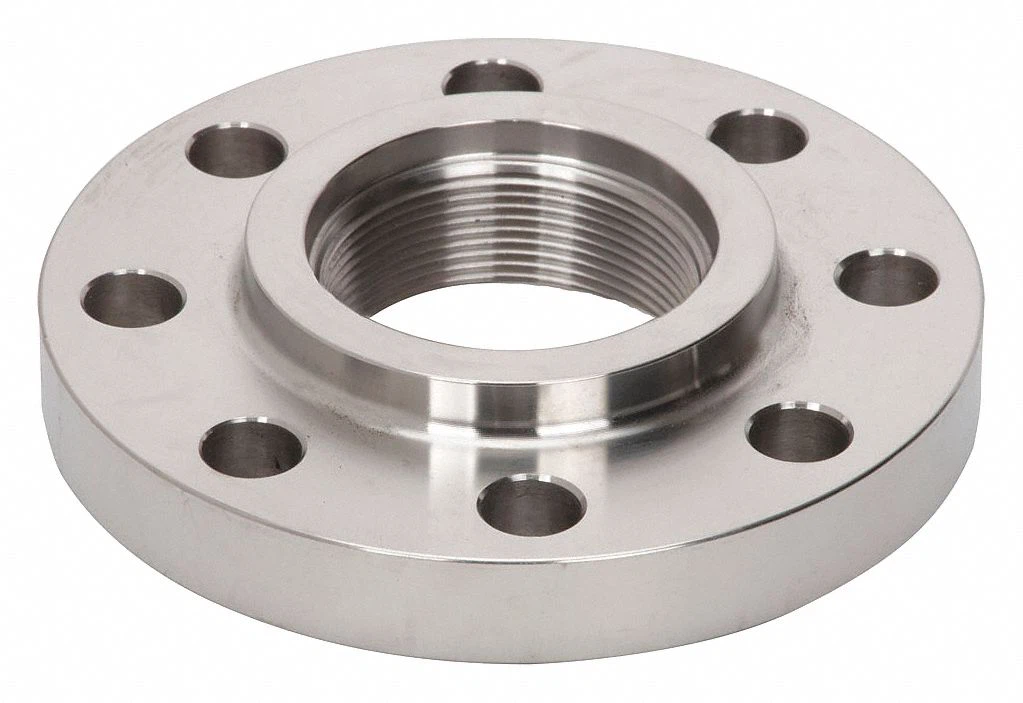
According to the different materials used, flanges are often divided into two categories: gray cast iron pipe flanges and steel pipe flanges. Among them, the steel pipe flange is the most widely used. According to the different connection methods with the pipeline, it is divided into three types: integral type, flat welding type, and butt welding type. According to the shape of the flange sealing surface, it is divided into flat type, Convex surface type, concave-convex surface type, tenon and groove surface type, ring joint surface type, and other 5 types. In practice, the most used is the flat steel flange.
When selecting flanges, the following points should be paid attention to ① First, the type of flange should be determined according to the design or use requirements; ② After the type of flange is determined, the nominal diameter and nominal pressure of the required pipe should be determined To determine the inner diameter of the flange, the outer diameter of the flange, the thickness of the flange, the number of flange bolt holes and other factors. Among them, the most important thing is to determine the inner diameter of the flange, because when the nominal diameter of the pipe is the same but the nominal pressure is different, the outer diameter of the pipe is also different, so the corresponding inner diameter of the flange, flange thickness, and other dimensions It will be different too. In general, when purchasing, in addition to specifying the nominal diameter and nominal pressure of the pipe, special attention should also be paid to the outer diameter of the pipe to be matched, so that the inner diameter of the flange can be accurately determined when selecting the flange, so as to ensure that other sizes meet the requirements.