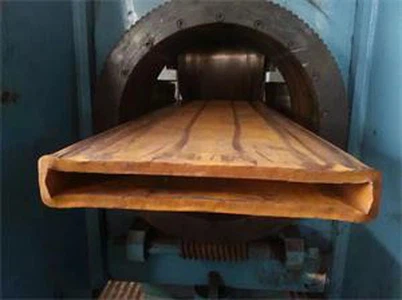
The Forming Method Of Rectangular Tube
Leave a message
1. Solid bend
To put it bluntly, solid bending is tamping the bending. The inner and outer rollers and the inner and outer walls of the pipe material are double-tamped during the actual bending.
1) Because the rebound is small and the forming is accurate in solid bending, the R of the inner corner forming is more accurate as long as the roll shape is accurate.
2) The solid bending flaw also has the effect of drawing/thinning. First, the solid bending will cause pulling at the bend, reducing the vertical length of the bending line; second, the metal material at the fold of the solid bending will soften due to pulling.

2. Hollow bend
The unilateral contact between the outer roller and the surface of the tube generates a bending distance, which is used to bend the cutting material. The bending line will shrink as a result of the hollow bending. Because of the shrinking effect, the bending line will stretch vertically, and metal material will be deposited and thickened at the bend. The hollow bend has a shrinking/thickening effect.
1) The advantage of hollow bending can be used for perimeter bending before solid bendings, such as simultaneous bending and casting of the top/side of the rectangular tube. The empty bend can also bend the inner angle of R<0.2t without cracking the wall thickness.
2) The main disadvantage of hollow bending is that when the rectangular tube is hollowed on the top/side of the line because the upper and lower rollers together cause the working pressure, the forming force can easily exceed the zero boundary point, resulting in edge imbalance and concave, which will also affect generating sets operate smoothly and form quality. That is also characteristic of different types of rectangular tubes and round tubes.
In practice, these fundamental methods should be assigned to the process part based on the product in the forming of square and rectangular steel tubes. It is critical to consider the impact of the drawing/thinning effect of solid bending and the shrinking/thickening effect of hollow bending on product quality; otherwise, the side of the rectangular tube will be concave when forming, and the finished tube will expand and shrink vertically, making it impossible to straighten.